
Growing Up in Kinnaur: Mountains, Wildlife, and a Journey Back Home
I grew up in Kinnaur, a mountain district in Himachal Pradesh in northern India. I was surrounded by tall deodar (Himalayan cedar) trees, drinking fresh water from the Nagas-ti (spring water ), seeing snow-covered peaks, and walking through Oak and Pine forests. As a child in a joint family, most of my time was spent on the farms, learning about cattle, monsoon to my favourite season where Kinnaur covers itself under snow , farming, and watching birds.
Our elders told us stories about Shu (our local deity), the trees, and the spirits that live in the mountains. My parents and grandparents would sometimes scare us by saying a vulture would take us away, just like a crow takes the chicks of a chicken, if we didn’t listen. Those stories were mostly to make us behave, but they were also how we slowly learned about this land. And somewhere in those stories is where I began noticing birds.
The Moment the Wild Called
In the early 2000s, like every kid, I waited for Shaktimaan. But the show that stayed with me was Earth Matters by Mike Pandey on DD1. One day, they aired an episode about the Himalayan Griffon and why it was dying.
Many cattle were treated with diclofenac, a pain-relief medicine safe for livestock but deadly for vultures. When griffons fed on those carcasses, it caused kidney failure, and they died within days.
That is when I realised that the same bird from our childhood, the one elders used to scare us, was actually facing a real threat because of human actions. That realisation stayed with me. Maybe that was the moment the wild first called.
Returning to Kinnaur
Later, when I moved to cities for higher studies, everything was new and exciting at first. But whenever I watched National Geographic, seeing the wild, the beauty of the world, and people travelling and experiencing cultures, cultures like we celebrate in Kinnaur, it reminded me of home.
After years away, I felt that my real learning was still in Kinnaur. It took time and courage, but on 26 August 2021, after COVID, I finally returned.
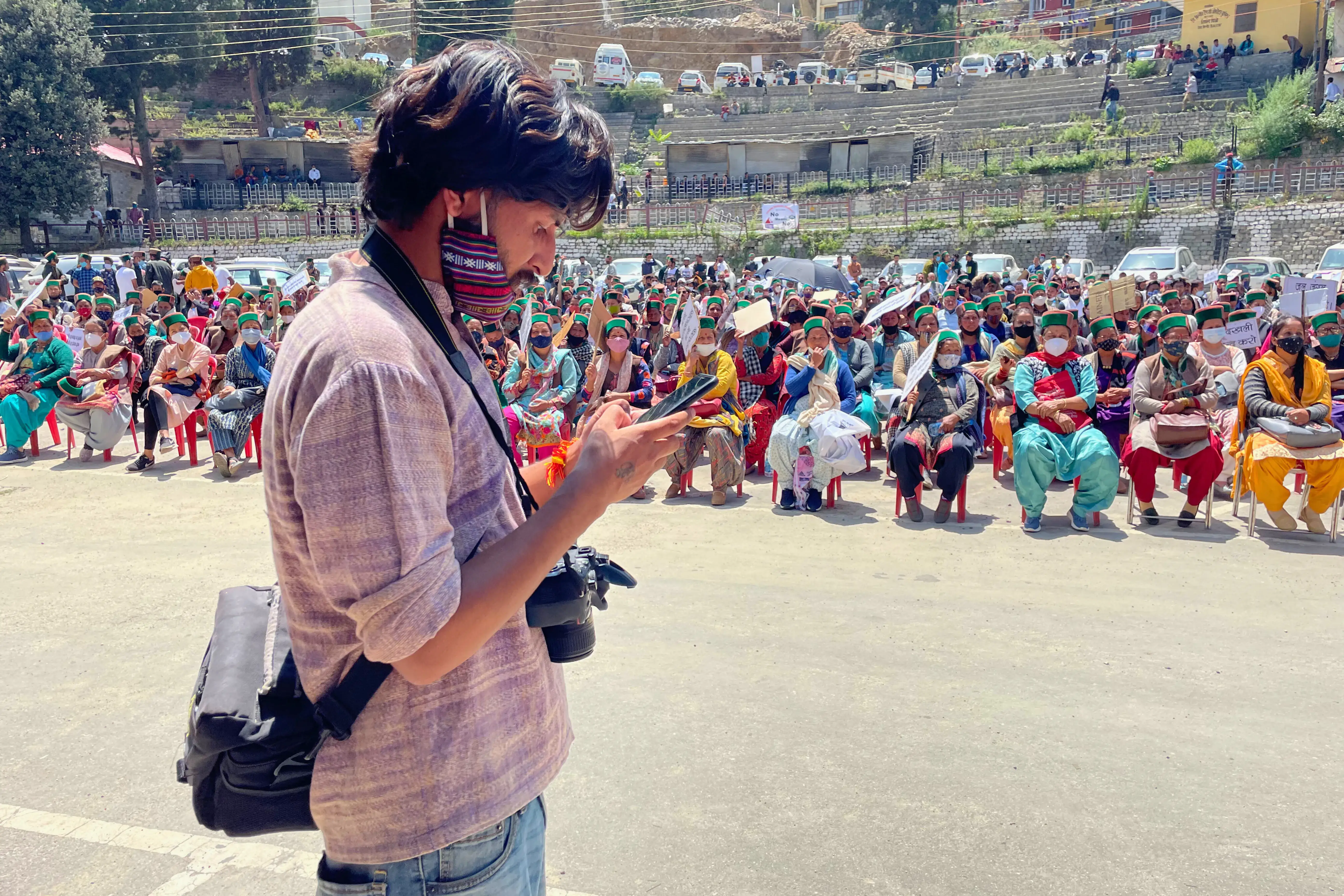
I came back for an open call to protect nature, where people from across Kinnaur gathered with one cry: “No Means No, no more dirty development.” It was a strong stand to protect the mountains. This was right after COVID, and everything felt different. People were asking questions, raising their voices, and I stood among them, trying to understand what I could do. That day was special.
Learning From Villages
After that, I began travelling from village to village: Rarang, Thopan, Khadura, Kanam, Moorang, meeting youth, listening to their stories, and learning from people like Yowan Negi, seeing how communities live.
One core memory from those early days was walking the Kashang water canal with the local community, a 26 km stretch in the high mountains above 12,000 ft that carries glacier water to the farms of Rarang, Thopan, Khadura, Akpa, and Pangi. The narrow path, the high cliffs, two days of walking, and seeing how people depend on that water, gave me a deeper understanding of how we share the same landscape, yet life is different in every place.
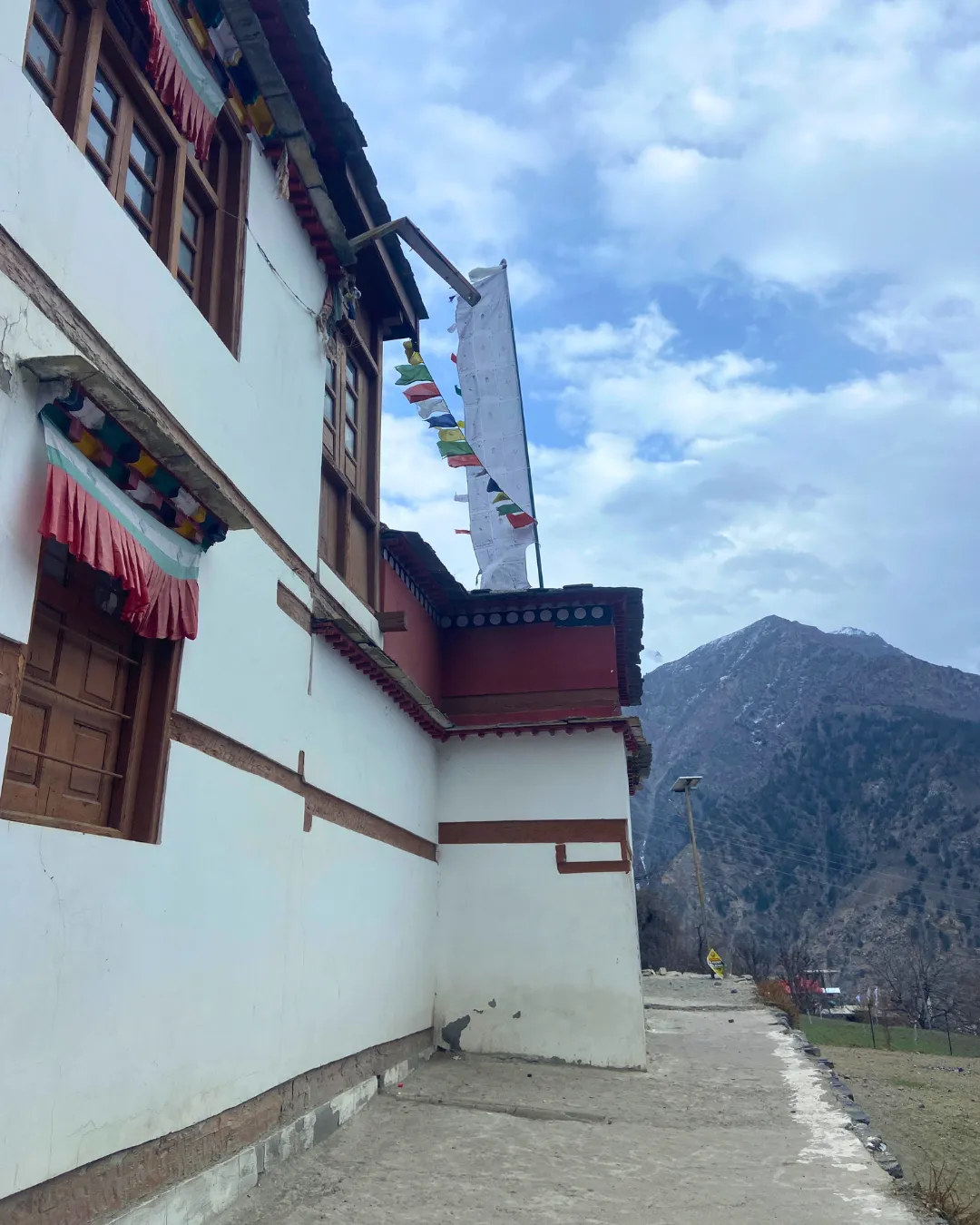
Then I visited Kanam, an old, unique, and culturally rich village, a beautiful mix of Shu culture (our ancient animistic practice) and Buddhism, visible in their gompas and shu santang. Even though we all come from Kinnaur, our languages, cultures, and ways of living are so different. Every place taught me something new.
Journey to Border Villages
As the journey continued, it took me to Maling village in Hangrang Valley for the Buddh Purnima celebration. From there, I saw a green patch on the right side of the Spiti river, an oasis in the cold desert surrounded on all sides. Something inside me said I must go there.
The next morning, I walked down. There was no proper path, but after some time, I reached the village named Leo. Maling, Leo, and Nako are border villages of India.
In Leo, I met an 86-year-old Meme (“grandfather”). As we spoke, he told me how, as a child, he travelled to Tibet with his father. Tibet lies across the border now, and movement is no longer possible like it was in his time. But the glow on his face as he remembered those days made the past come alive. Even though he was sharing his memories, it felt as if he took me with him.
Across Kinnaur, I have heard stories that people once travelled freely to Tibet for trade, and traders came here. These stories always fascinate me. They make me pause and imagine a world that existed long before borders.
Even a single story from an elder can take you into the past and show you a world no map can capture.
Sitting by Reo Purgyil
That evening, I walked to the outskirts of the village and sat on a cliff, looking down at Leo and towards the tip of Reo Purgyil, the highest peak of Himachal Pradesh. I have always seen mountains as something special, but seeing Reo Purgyil made me emotional.
Sitting there, hearing the river, watching the cold desert stretch below, the old village resting quietly, I felt warmth, connection, and a deep pull to explore and understand. Not just the mountains, but myself, my people, and the life that moves quietly alongside the wildlife here.
I wished to return soon. With that in me then I walked back to the village.
A New Path
Journeys like this continued. In the process, I was exploring myself, trying to understand my place in these mountains, among the people, and alongside nature.
One day, I came across a link on the internet about an application for a fellowship programme. When I opened it, I paused and reflected deeply. What do I really want to do with my life?
That moment quietly marked the start of a new journey.
About Shu Culture
Shu culture is a way of life rooted in deep respect for nature and the spirits that inhabit it. Communities honour mountains, forests, and springs through rituals, offerings, and gestures, living in harmony with the environment and sustaining both nature and their spiritual traditions.
About the Author
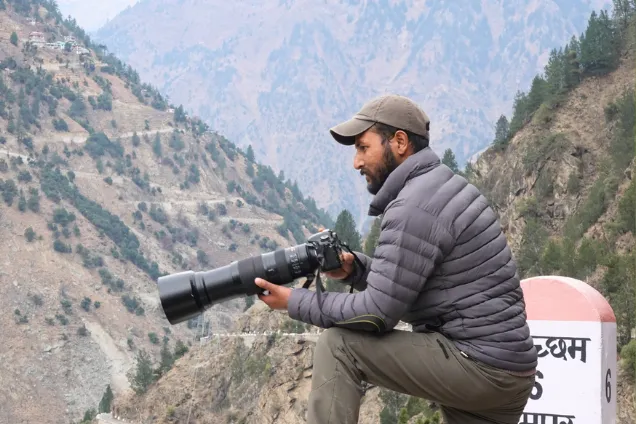
Mahesh Ronseru is a mountain photographer from Kinnaur who loves light and storytelling.