Walking with Nature: My Journey as an Earth Educator in Kinnaur
I was travelling from place to place, but somewhere inside, I was searching for myself , a strong desire to follow my passion. When I clicked on that link that day, I didn’t expect anything big. But it made me slow down and think about where I wanted to take my life. Do I really want to follow my passion, or should I go back to the mainstream world? That one moment made the question clearer, and somewhere I knew I had to give myself an honest chance. So I applied.
And somehow, out of people from across the country, I got selected as one of the 20 Earth Educators under the YouCAN network, supported by the National Geographic Society. That one small link on the internet suddenly turned into a real doorway.
Soon, I travelled all the way to Tamil Nadu for the workshop, a place completely different from my mountains. There, I spent a week learning the basics of education, nature storytelling, and film-led sessions with people who genuinely shaped my understanding: Shekar Dattatri, K. Ramnath Chandrasekhar, Rachita Sinha, and many other incredible educators and participants.
When the training ended, I came back to Kinnaur with a clearer purpose than ever before. I chose three government schools, Chhitkul, Rakchham, and Rekong peo to begin my work.
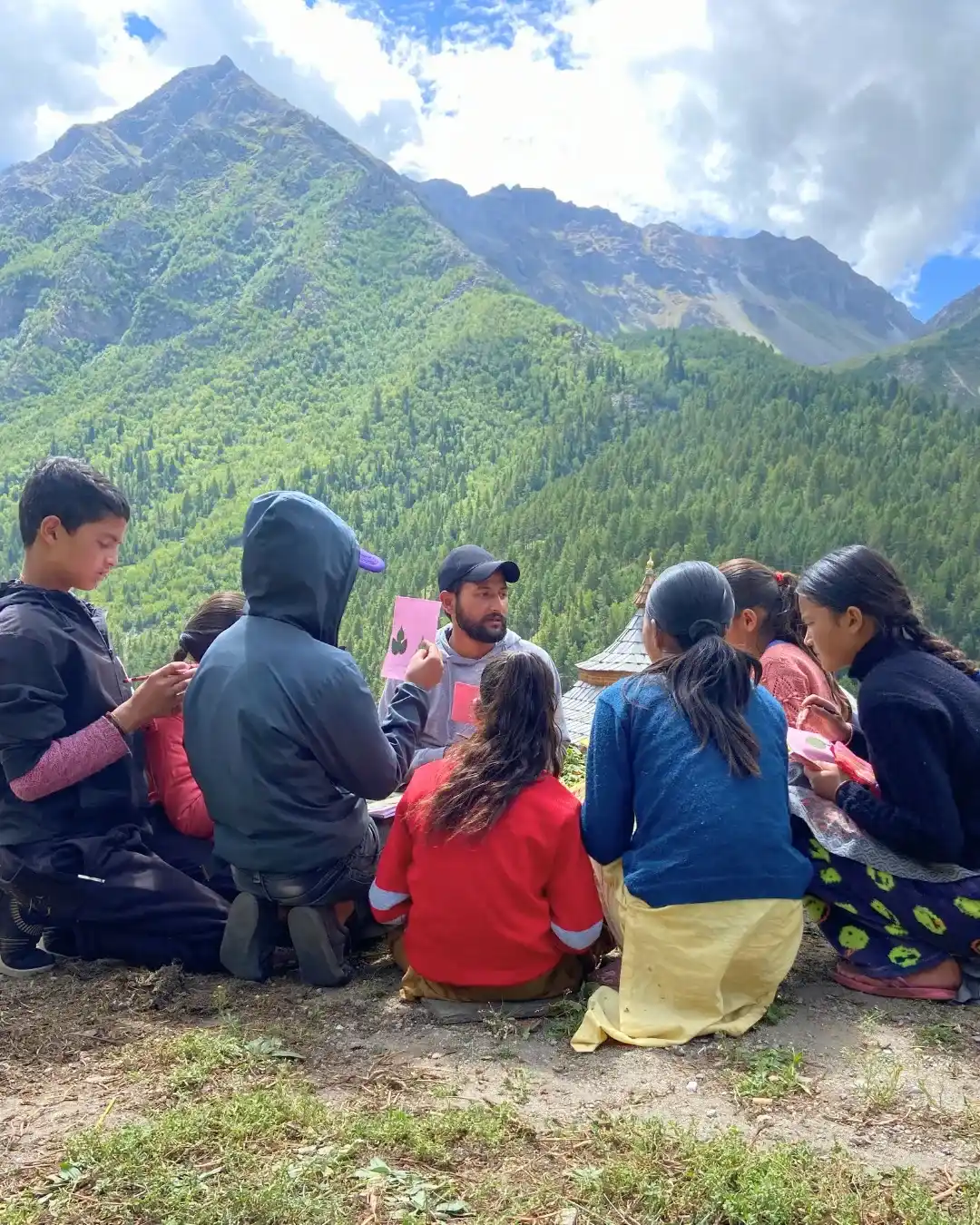
school
The first time I stepped into Chhitkul as an educator, I felt both familiar and new. I had visited Chhitkul before, but this was the start of a journey I had always wanted to pursue. The mountains and the Baspa River welcomed me warmly. That connection shaped how I approached my work and inspired the journey ahead.
I joined the Earth Educator Fellowship in 2022 with the Youth Conservation Action Network (YouCan), not for recognition, but because of a deeper purpose. Growing up in Kinnaur, my community and I shared a strong bond with forests, rivers, springs, and wildlife. Observing changes brought by development made me realize I had a responsibility: to understand nature, protect it, and share that understanding with the next generation.
Learning Outside the Classroom
The first day I spent with students in these schools was about breaking the ice, as I didn’t want to come across as a teacher standing in front of a class. I wanted to be friends with someone they could connect with. I knew that if I missed building that trust, the sessions would feel like just another lesson, which is exactly what I wanted to avoid. I wanted learning to be friendly, interactive, and connected, where both sides could learn from each other.
One Sunday, I planned a small nature walk with the kids. As we walked down to the village near the Baspa riverbank, I was amazed by their understanding of the local flora, the names, their uses, and the traditional knowledge passed down through generations. Their observation and knowledge reminded me that children here are not just students; they are carriers of a living, local ecosystem understanding.
These were some of the first sessions I conducted with them. We also tried film screenings, but I quickly realized that there were very few films in Hindi or even locally relevant content that could teach them about their own wildlife and landscape. This made me understand the need to document the species and ecosystems around us, a project that has now become a key part of my work and passion, combining learning with conservation and the preservation of local knowledge.
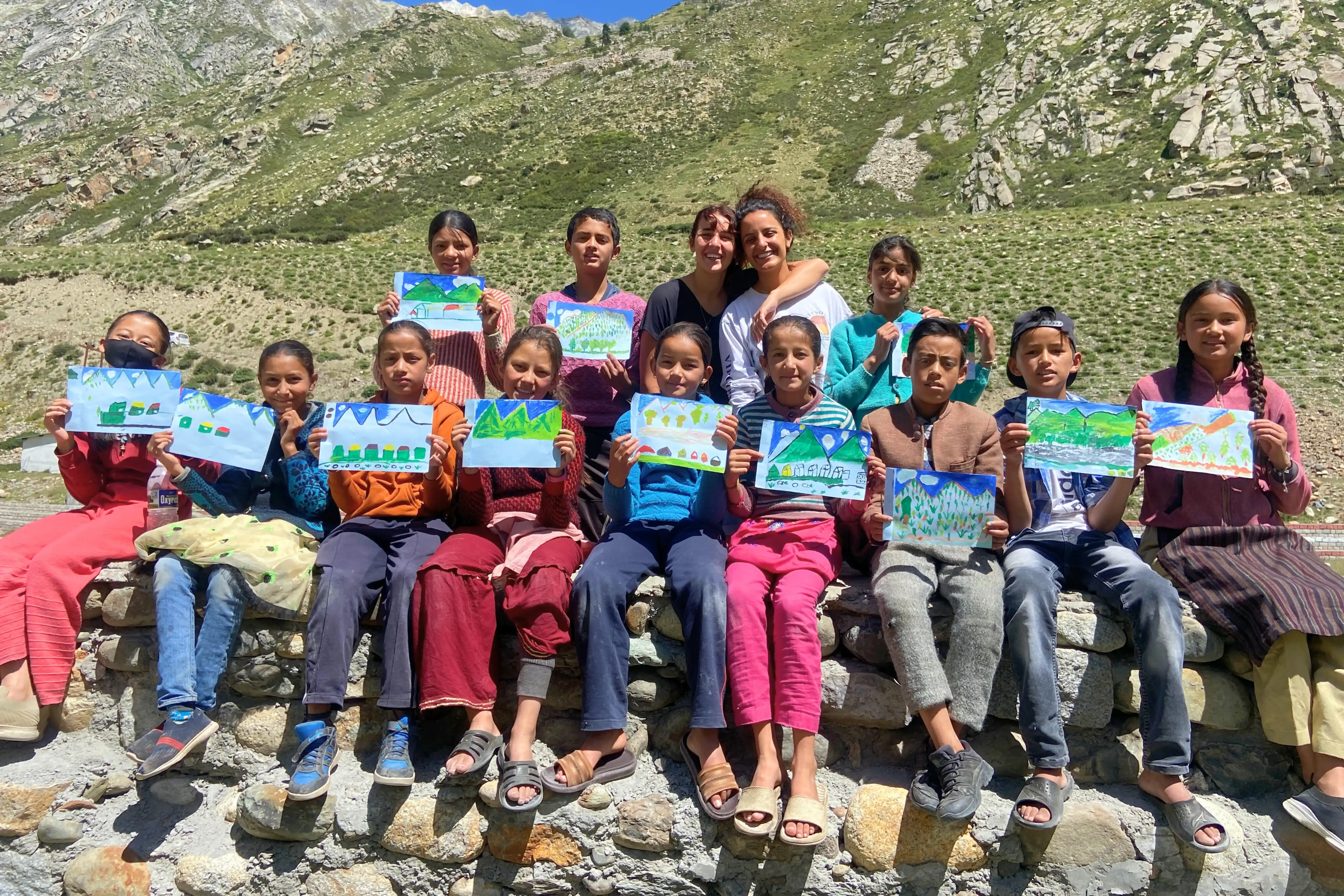
Teaching Through Experience
I never wanted learning about nature to be limited to a classroom. My principle is simple: Step outside. Observe. Touch. Ask. Think.
I conducted hands-on sessions with students through:
- Nature walks through forests
- Bird-watching along trails
- Exploring river ecosystems
- Mini-theory discussions outdoors
- Film screenings as exposure to see the world differently
Students loved the outdoor sessions the most. Walking through forests, seeing through binoculars, noticing the colours of birds, feeling the soil, observing the river, and asking questions created a learning environment that was alive and meaningful.
A Moment That Stayed With Me
While trekking up from Chhitkul, I asked students about the plants around us. They not only named them but also explained their uses, medicinal properties, and how their elders harvested them. That moment made me realize that these children are not empty notebooks. They carry generations of knowledge, and my role was to build understanding with them to connect that knowledge with larger ideas about love for nature.
For instance, the children shared how their parents use a plant called Arch with its dried roots to treat injuries. Its paste, which is known to be effective for wounds. They also explained that turmeric can be added to enhance its healing properties, a detail that truly amazed me.
What I Saw in This Journey
While teaching and exploring with the children, I also noticed challenges:
- Unmanaged waste reaching even remote villages
- Gaps in textbooks mountains, rivers, and wildlife are mentioned, but local Practical ecological knowledge is missing
- Pressure from mainstream education making us stick more to textbooks
- Risk of losing indigenous knowledge if it isn’t passed on
These observations reinforced why practical, on-the-ground experiences are essential for children to truly understand and care for their environment.
My Approach and Vision
When I meet students, I try to build relationships as a friend rather than follow a traditional style of teaching. Learning becomes most meaningful when it is shared, interactive, and engaging.
I dream of creating a common learning space where children, elders, travelers, and volunteers can come together to explore nature, share stories, and connect traditional knowledge with practical learning. A space where curiosity, understanding, and conservation go hand in hand.
A Note of Thanks
I want to thank the teachers in these schools for giving me their time, energy, and support, and especially the children who joined me on these journeys. They have taught me more than I could have imagined. The inspiration for my work comes from my community’s relationship with nature, the forests, rivers, springs, and wildlife of Kinnaur.
Through this blog, I am sharing my journey as an educator. Though the fellowship ended in 2023, What started as simple nature walks with students slowly grew into dedicated bird walks with young people from across Kinnaur. Their curiosity, the questions they asked, and the excitement of spotting even the most common birds opened a completely new chapter in my journey.
In the next blog, I will share how those early walks developed into a deeper birding movement and how that journey shaped my ongoing work with Kinnaur’s wildlife.
About the Author
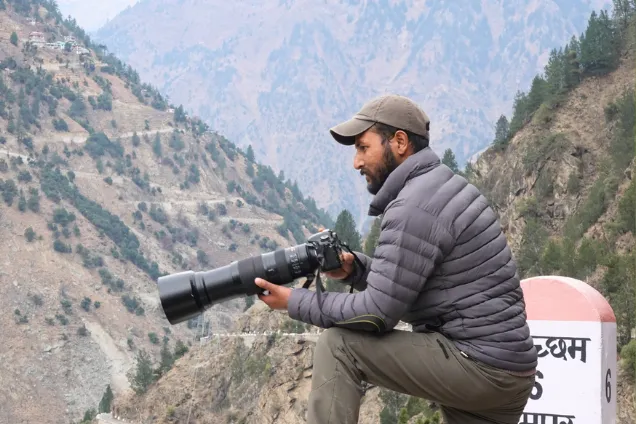
Mahesh Ronseru is a mountain photographer from Kinnaur who loves light and storytelling.